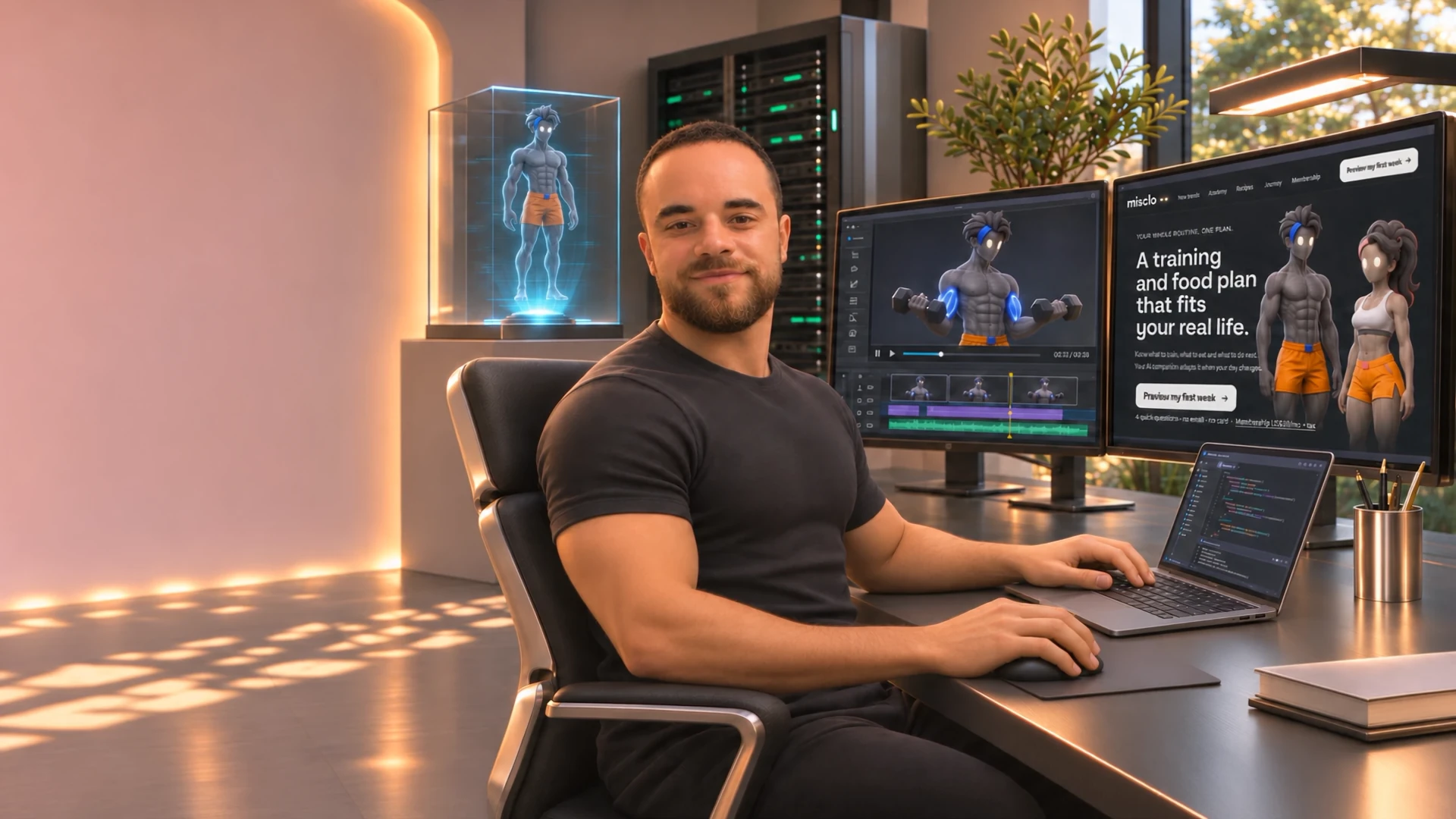
Inside my lab: bringing Misclo to life.12-second silent film · animated brand artwork
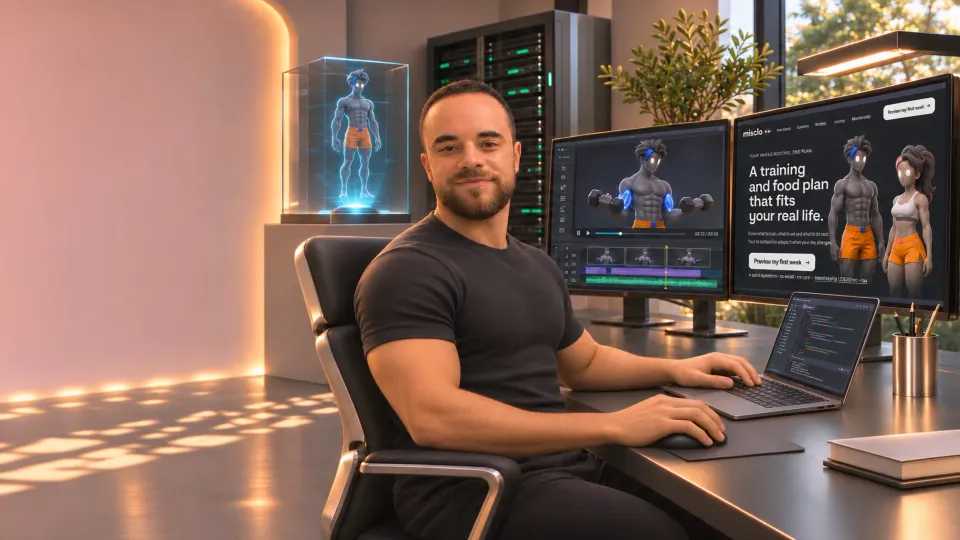
Aymane codes at his laptop in his developer laboratory. The Misclo website appears on a monitor while Theo moves in a hologram and demonstrates a dumbbell exercise. Aymane turns toward the camera and smiles.
Build · Immersive & 3D websites
A website that feels like a film, and still books the call.
I design and build immersive websites for coaches, educators, product brands and premium services: a cinematic entrance, a 3D scene or character, an interactive demo, whichever one earns attention for your offer. Then I wire it to the job the site has to do, whether that’s bookings, sales or leads.
I’ve managed 45+ digital projects and led a team of 12 developers. Today I build with AI as my team, and you see every version before it replaces the last one.
Builds start at $1,600, at a fixed price set from a written brief. The call is 15 minutes on Cal.com, and you leave with a next step.
Why most sites get skipped
Your offer is premium. Your website looks like everyone else’s.
Stock photo
Same layout · stock photos · three feature cards
The templateBuilt for one offer
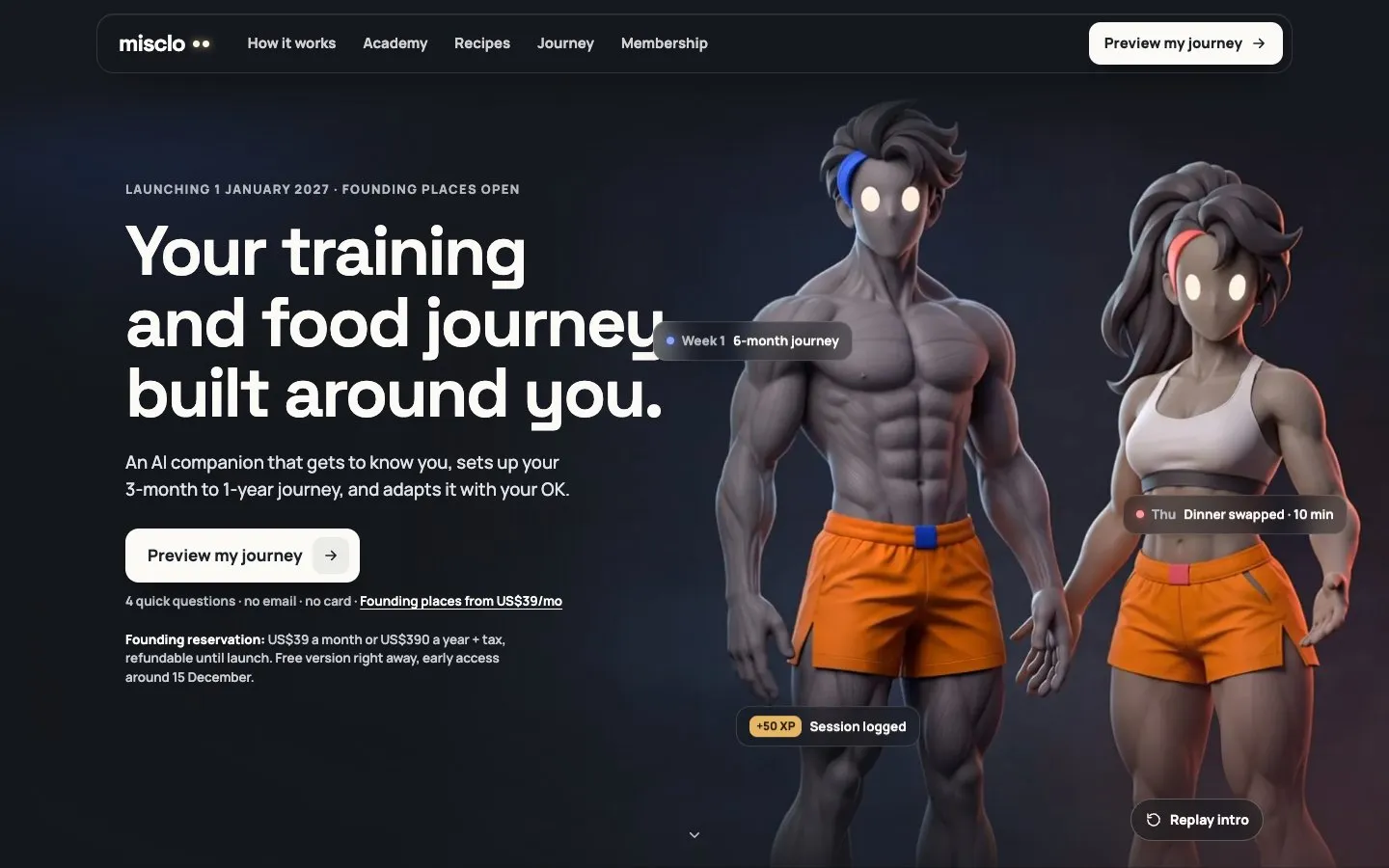
Left: a diagram of the usual template, with a stock photo, a headline and three feature cards. Right: the Misclo homepage on staging, with two stylised 3D characters on a dark stage, one headline and one action.
Drag to compare. Left: the template pattern, drawn as a diagram. Right: Misclo’s homepage on staging, my own app in development, with AI-generated character art. Not a client before and after.
01
The template problem.
Your site uses the same layout, stock photos and three feature cards as your competitors’. A visitor can’t tell what makes you different, so they don’t stay long enough to find out.
02
The heavy-showpiece problem.
Most “wow” websites cost an agency budget and months of work. Then they stall on a phone, ignore reduced-motion settings and hide the button that matters.
03
The pretty-but-idle problem.
The site looks good and does nothing. The booking isn’t connected, there’s no lead capture and no analytics, so you have no idea which page actually works.
How I build
The disciplines of an agency, run by one accountable person.
When I was CTO, a site like this went through a strategist, a UX designer, a copywriter, frontend and backend developers, a motion artist, QA and someone to launch it. Your project still gets every one of those disciplines. The difference is that each one is an AI lane I brief, review and approve. You deal with one person who knows every decision on the project.
01Your decision
02Brief
03AI lanes
Strategy
UX
Copy
Frontend
3D/Motion
QA
04Automated checks
05Your approval
06Next versionprevious kept as rollback
Here’s what that changes for you:
You see working versions, not just mockups. Each round is a running page you can open on your phone.
One change at a time. Each version sits beside the one you already approved, and nothing replaces it until you say yes.
Measured, not eyeballed. Automated checks for layout at several screen sizes, accessibility and broken states run before I show you anything.
Written decisions. Your feedback is saved word for word, and every version comes with a short report covering what changed, what was tested and what’s still open.
A handoff anyone can pick up. The project leaves with documentation that another developer, or another AI, can continue from.
What “Map” produces
The first thing you get from me is a document, not a mood board.
Here’s an excerpt of a Build Brief. The business is fictional, and so are the numbers: they’re targets written before the build, not results. It shows the level of detail you’ll sign off on before anything is built.
Fictional examplebuild-brief.txt
BUILD BRIEF (FICTIONAL EXAMPLE, not a real client)
Client:Tidewater Pilates Studio (fictional)
Visitor:Women 30-55 nearby, comparing three studios on a phone
One action:Book a free intro class
Signature:Scroll story: one class from arrival to stretch,told in 5 frames; poster stills on reduced motion
Pages (5):Home · Classes · Teachers · Pricing · Book
Editable:Class times, prices, teacher bios, FAQ (owner editsin a git-based CMS; any subscription on owner's account)
Performance budget (targets, mid-range phone on 4G):LCP <= 2.5 s · CLS < 0.1 on every pageHero poster <= 150 KB (WebP)Phone film <= 4 MB, fetched only after firstinteraction or browser idle; never on Save-Data3D assets: glTF + Draco/KTX2, <= 3 MB total
Wiring:Booking calendar → confirmation email → studio CRM tag
Acceptance tests (agreed before build):
Out of scope:Online shop, member login
Fictional example for illustration. All figures are example targets, not measured results. Your brief is written with you after the call.
Proof from the lab
Don’t take my word for it. Look at the work.
I don’t show you client logos or borrowed case studies. I show you three builds from my own lab, each dated and labelled with its real status. Every card opens the full build notes in the lab.
My own app, in development · not launchedStaging v7·
Misclo is my fitness and food app, and its site is my most complete immersive build. It has a cinematic entrance film with Skip, Replay and a lighter version for phones. A WebGL 3D body map shows 228 muscles and bones in 21 muscle groups (anatomy model by Alex Lashko), loads lazily and falls back to 2D without WebGL. Each version was built beside the last, and every earlier one is kept as a working rollback. Launch is set for 1 January 2027.
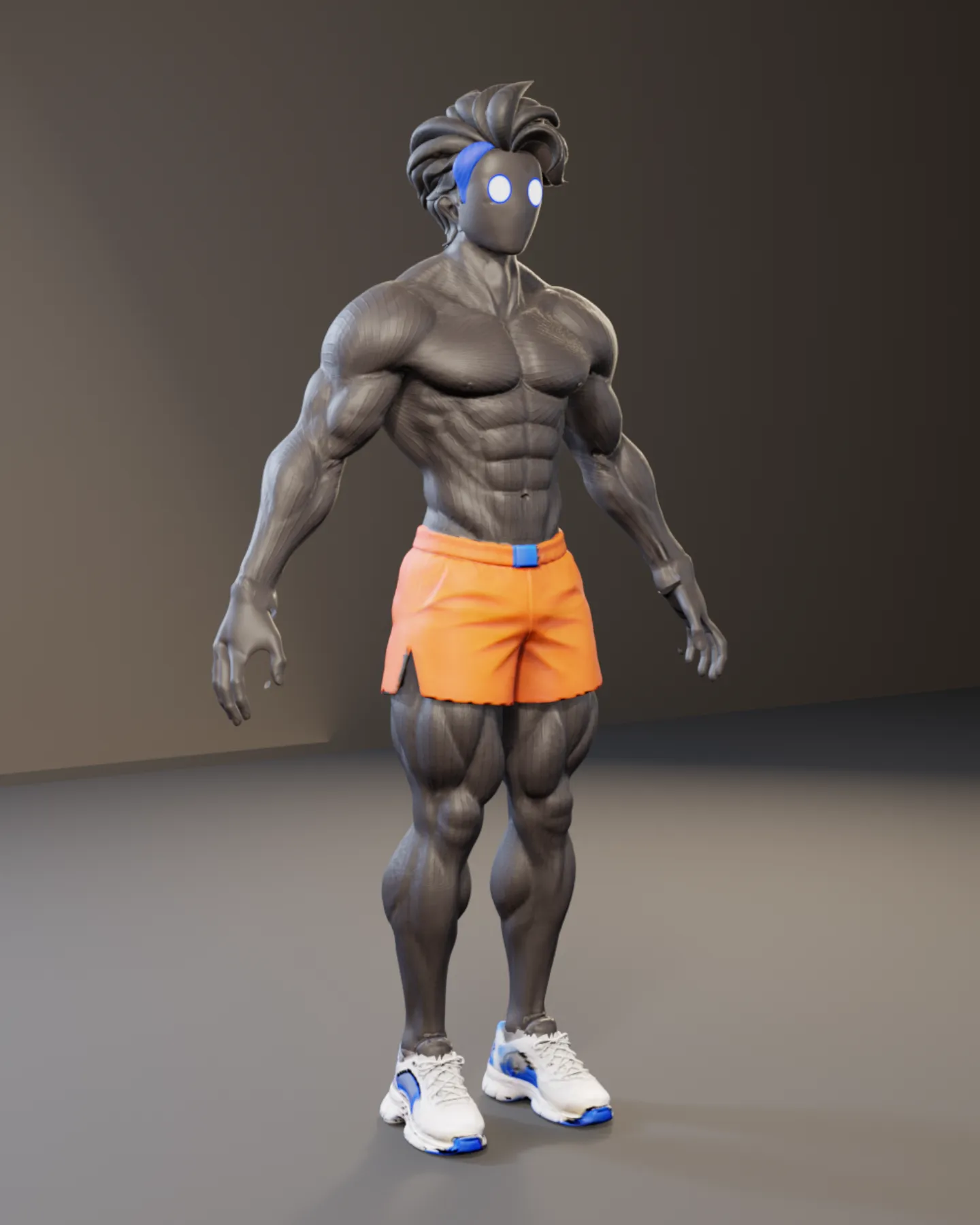
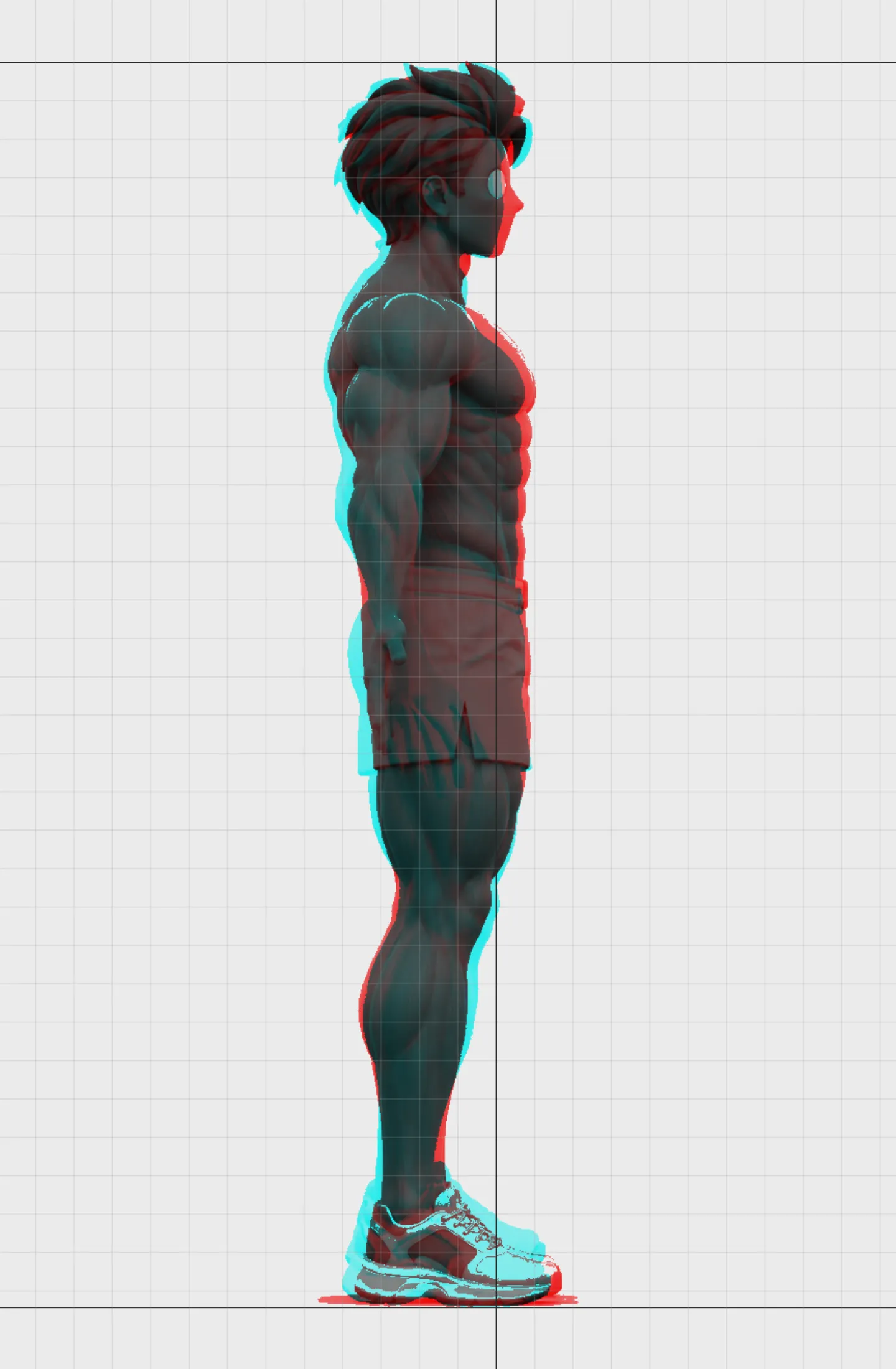
The base mesh was generated with Tripo AI. I rigged, animated and art-directed him in Blender, using tools that AI wrote under my direction. Every change is measured against the reference art, and nothing approved is ever overwritten. What reaches the web today are rendered stills.
I designed and built this site myself, working with AI. Every page is prerendered so it reads without JavaScript, and it’s checked with Playwright and axe accessibility tests. I directed the hero film, which was generated with AI. It sits behind a poster, so the headline and the call button never wait for it. People who ask their device for reduced motion or data saving get the still.
Before AI became my team, I built with people. As CTO of a US marketing agency, my team delivered and maintained 28+ client platforms. Among them were a multi-school learning platform in three languages and a course → assessment → certificate → purchase journey for a certification brand. Clients stay unnamed until they give permission.
See the career work
The first three are my own projects, not client results. Misclo has no users or sales yet, and I won’t pretend otherwise.
My animated double (AI-generated)
Aymane Hitmi · Bali · solo with AI
Who builds it
Aymane Hitmi. A former agency CTO who now builds with AI.
I’m a former CTO of a US marketing agency. I led a team of 12 developers and I’ve managed 45+ digital projects. I’ve also built and shipped two software products of my own.
Today I work solo from Bali, with AI as my team, and I build in public. Misclo, Theo and this website are how I test the method before I sell it. When you hire me, you get the same versioned, tested, show-first process you’ve just seen.
You always know which step we’re in, what I need from you, and what you’ll have at the end of it.
00
The 15-minute call
I do
I ask what you sell, who the site is for and what it has to make happen.
You do
Answer four short questions on the booking form when you pick a time: your name, email, business and what the site needs to do.
You receive
An honest next step. That could be a free tool to do it yourself, a direct build proposal if the brief is already clear, the Personal AI Audit & Implementation Roadmap ($970) if the website is part of a bigger question, or “not a fit” with a pointer to someone who is.
01
Map
I do
I write the Build Brief: the audience, the one action the site must drive, the signature experience, the page list, which content you’ll edit and how, a performance budget and the acceptance tests.
You do
Read it, change it, approve it.
You receive
A fixed scope and a fixed price before any build starts.
02
Build
I do
I build in versions you can open on your phone. Each one comes with a short report covering what changed, what passed and what’s open.
You do
Review each version and say yes, or tell me what to change, one thing at a time.
You receive
A working site that gets better each round, with the previous version always kept.
03
Launch
I do
Final QA on phone, tablet and desktop, the accessibility pass, analytics, redirects and going live.
You do
Run through the acceptance tests with me.
You receive
The live site and the handover pack: the walkthrough recording and the operator guide.
04
Automate
I do
I connect what happens after the click, like the confirmation, the follow-up and the handoff to your CRM, if it’s in scope.
You do
Decide which follow-ups should be automatic and which stay personal.
You receive
A site that keeps working after the visitor leaves.
Ways to work together
Two starting shapes. Your project sets the final scope.
Every build starts from a written brief and ends with tests we agreed on before I started. Fixed scope, fixed price, no hourly meter.
Immersive Website
Launch Site
From $1,600
For a new offer, a relaunch, or a business whose site is its first impression.
Immersive Website
Immersive Flagship (3D, cinematic)
From $3,200
For brands that want the site itself to be the showpiece.
After launch
AI tools, browsers and your business all change. If you want me to keep the site working and keep improving it, the AI Operations Partner plan covers that monthly. We’ll talk about it when it’s useful, not before.
Prices in USD, starting points for a defined scope. Not sure which shape fits? That’s what the call is for.
What you get
A site that performs as well as it looks, and the keys to all of it.
Experience
One signature experience
Chosen for your offer: a scroll story, a brand film, a 3D scene or character, or an interactive demo of what you sell.
Copy
Conversion copy, written for the page.
One promise, one main action, and objections answered where they come up.
Wiring
The job wired in.
Booking, checkout or lead capture connected to your calendar, CRM or email tool.
Mobile
Built for phones first.
A lighter media version for mobile, a still poster instead of motion when people ask for it, and a 2D fallback when 3D isn’t available.
Access
Accessibility pass.
Keyboard routes, readable contrast, real text instead of text inside images, and axe checks across the site’s states.
SEO
SEO and analytics basics.
Clean titles and descriptions, prerendered pages, and privacy-respecting analytics on the actions that matter.
CMS
Content you can edit
Without calling me for every sentence. The Build Brief lists exactly which content is editable and how you’ll edit it.
Questions
What people ask before they book.
How much does it cost?
Launch Site starts at $1,600 and Immersive Flagship at $3,200. Your Build Brief fixes the final price before I start.
How long does it take?
That depends on the scope, and the timeline goes into your Build Brief before we start. The biggest factor is usually how quickly we can review versions together, not the build itself.
Built with AI: won’t it look generic?
Generic comes from skipping the thinking, not from the tools. Your site starts from a brief about your visitor and your one action. Every version is reviewed by me, then approved by you. Look at the Misclo and Theo work above, and read the build notes in the lab.
Will 3D and video slow my site down?
Not if they’re planned in from day one. I write a performance budget into the brief, with numbers: load and layout-stability targets, a size cap for the poster, the film and the 3D files, and a test that checks them before launch. The page shows a still first, video and 3D load only once the page is usable, phones get lighter files, and visitors who ask for reduced motion or data saving get stills. If 3D isn’t supported, there’s a 2D version.
Is it accessible?
Accessibility is part of the acceptance tests: keyboard routes, contrast, real text, motion preferences, and automated axe checks across the site’s states. If your site needs a formal legal-compliance audit, I’ll tell you up front: that’s a certified auditor’s job, booked by you directly, and not part of my build.
Who owns the site?
You do: the code, the content, the domain and the accounts. Third-party tools and hosting run on your own accounts, so you’re never locked in.
Can I edit it myself?
Yes. Your Build Brief lists which content you’ll edit, such as text, images, prices and FAQs, and how: usually a git-based or headless CMS chosen for how often you change things. Any CMS subscription is billed to your own account. The operator guide shows you how.
Is AI-generated imagery or film safe to use?
I use AI media where it serves the story, label it honestly, and check each tool’s commercial terms before anything goes live. Where a third-party asset is involved, like a 3D model or a motion pack, the licence is confirmed first. Some of my own lab assets are waiting on exactly that check, and you won’t see them on this site until it’s done.
Do you outsource the work?
No. You work with me. The team is AI, briefed and reviewed by me, and every decision has one accountable person behind it.
Can you show client work from your agency years?
Not by name without the clients’ permission. As CTO, my team delivered and maintained 28+ client platforms, and the career section of the lab describes the problems we solved, such as a multi-school learning platform in three languages, without naming anyone. On the call I’m happy to go deeper.
Will a new site increase my sales?
I can’t promise that, and you should be wary of anyone who does. What I can promise is a site built around one clear action, wired to measure that action, and tested against criteria we agreed on before building.
What happens after launch?
You get the handover pack: a recorded walkthrough and an operator guide. If you’d like me to keep it working and improve it month by month, the AI Operations Partner plan covers that; we can talk about it on the call.
Next step
Tell me what your website needs to make happen.
Have it built
Book 15 minutes with me
Book 15 minutes. Bring your current site, or just the idea. I’ll come prepared with questions, and you’ll leave knowing whether an immersive build is the right move, and what it would look like.
Free. No pitch deck. If it’s not a fit, I’ll say so.
Start on your own
Not ready to talk?
Start with the Solo Builder Blueprint, my free guide and worksheet: Choose → Set up → Build → Automate → Improve. No signup. The other free tools are in the library, ungated.